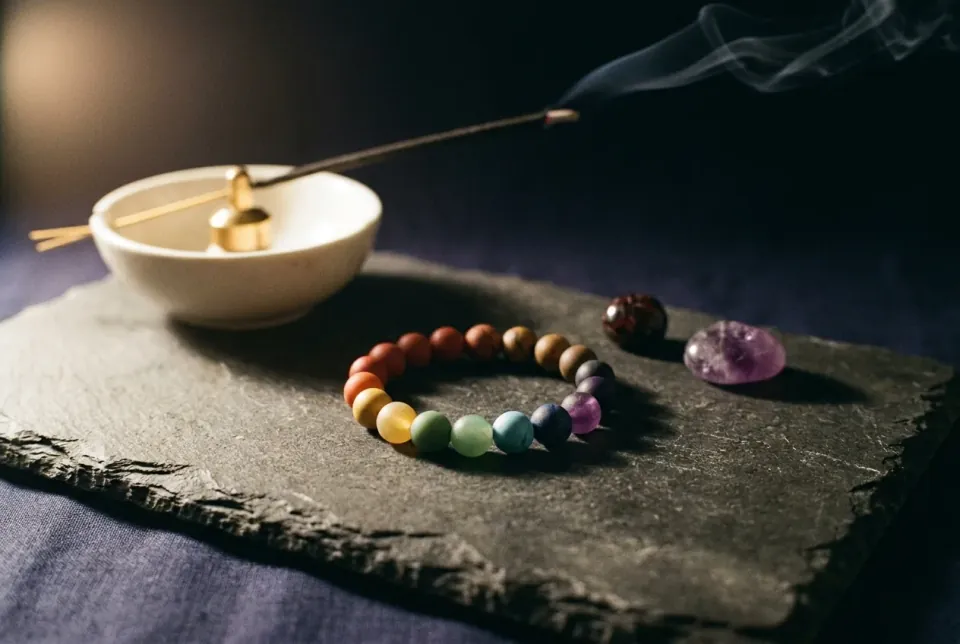
There are days when protection means staying close to your own energy. The room is crowded, the family conversation has old currents, or a demanding season makes every request feel louder than usual.
Within spiritual practice, protection jewelry can be a boundary cue, a prayer and an energetic anchor. It reminds you to use discernment before opening, answering or carrying what belongs to someone else. The strongest piece is rarely the one that makes you most afraid to take it off. It is the one that helps you feel present enough to choose your next action.
Protection has a long place in jewelry
Historical jewelry includes many protective objects. The V&A’s history of jewellery describes early jewelry worn against life’s dangers and later European pieces with inscriptions or stones believed to protect the wearer. The forms and beliefs changed across place and time. What remains familiar is the wish to carry a small point of safety on the body.
A contemporary practice can honor that impulse without borrowing every amulet as if it came from the same tradition. Start with the protection you actually need, then choose a symbol or stone whose context you are willing to learn.
Name the protection before choosing the piece
“Protection” can hide several different needs. A smoky quartz ring and an evil eye pendant may both be called protective, yet they ask the wearer to work in different ways.
When you need grounding
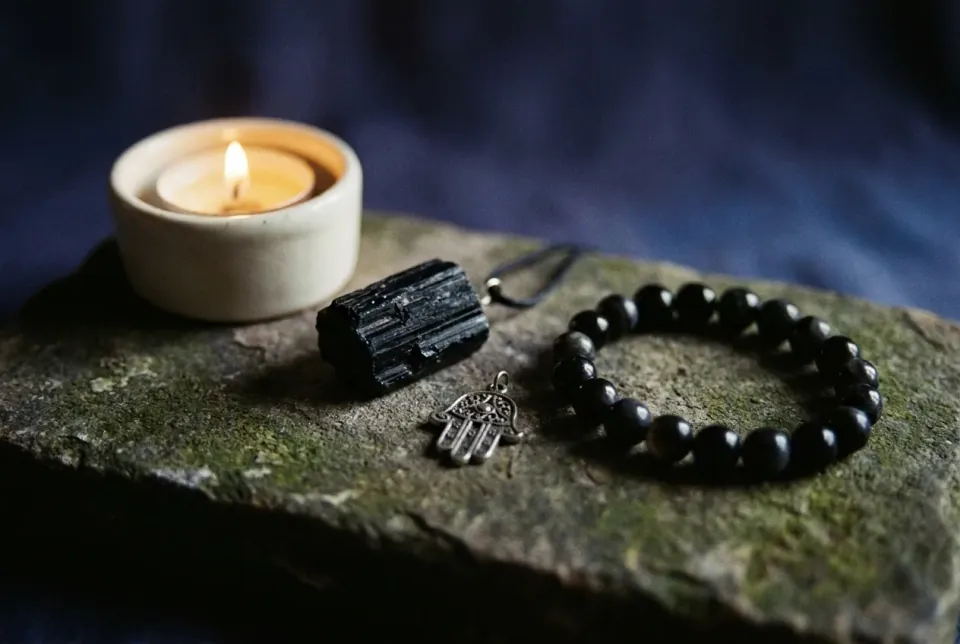
Grounding protection is useful when attention is scattered across too many people, tabs or obligations. Black tourmaline is commonly chosen for a firm energetic boundary; smoky quartz brings a quieter, earthward quality. Obsidian has a sharper presence and is often paired with truth and shadow work.
Weight and touch matter here. A stone at the sternum, a bead at the wrist or a substantial ring can bring awareness back to the body. Choose a piece you can touch without fuss when the pace of the room starts carrying you away.
When social boundaries feel thin
An eye-shaped nazar turns protective attention outward. The belief in the evil eye concerns harm carried through a gaze, while the amulet is worn to ward it off. Blue eye amulets are often called nazar and appear today in jewelry and home objects, as this evil eye overview notes. Our evil eye necklace guide separates the harmful gaze from the symbol worn against it.
A hamsa offers a different form: the open hand. It carries Jewish and Muslim histories, including the names Hand of Miriam and Hand of Fatima. Some versions include an eye, but a hamsa is not another word for nazar. My Jewish Learning traces the amulet’s contested history and varied motifs, while our hamsa necklace guide focuses on wearing and gifting it respectfully.
If you want a private symbol that is not tied to a named tradition, choose a shield-like shape or commission a plain disc with a word engraved inside. The unseen word can be enough.
When intuition needs a clearer edge
Labradorite is often chosen during change, especially when you want to remain perceptive without feeling open to every signal. Amethyst suits prayer, discernment and a quieter mind. A moon or eye motif can support the same practice if its language already belongs in your spiritual life.
Intuitive protection is not suspicion. It is the pause before agreement. Touch the piece and ask whether the invitation feels clean, whether the timing is right and whether a no would create more peace than a reluctant yes.
When you are moving between places
Travel protection can begin at the threshold. A faith pendant, hamsa, nazar or dedicated stone worn before departure marks the crossing from home into unfamiliar space. If your protection is rooted in a religious tradition, a cross, saint medal or other faith symbol may carry prayer with greater truth than a newly adopted crystal.
Choose secure construction. A travel talisman needs a clasp that closes fully, a chain that will not catch easily and a setting that protects the stone. Sentiment does not make a loose jump ring stronger.
When courage is the real need
Tiger’s eye is often chosen for courage, steadiness and directed action. A serpent can hold transformation and the nerve to shed an old role. Shield forms make the boundary visible, while a sun can support the decision to be seen.
Courage protection does not hide you from the moment. It helps you enter with your energy gathered. Wear the piece where your hand can reach it just before you knock, speak or step forward.
Six protective stones, six different textures
Black tourmaline feels firm and grounding. Obsidian tends to suit a more direct practice of seeing what has been avoided. Smoky quartz is chosen for settling excess charge toward the earth. Labradorite fits thresholds and intuitive boundaries. Amethyst brings a prayerful quality to protection. Tiger’s eye supports courage and clear movement.
Let these energetic associations guide your choice, and let gemology guide your care. Before exposing any gem to water, heat, sunlight, salt or cleaners, find the stone in the GIA Gem Encyclopedia and follow the maker’s instructions for its setting.
Do not let an online list overrule the response of your own practice. If black stones make a delicate season feel heavier, amethyst or a simple silver faith symbol may be better. Protection should help you inhabit your life.
Chakra jewelry protects through alignment
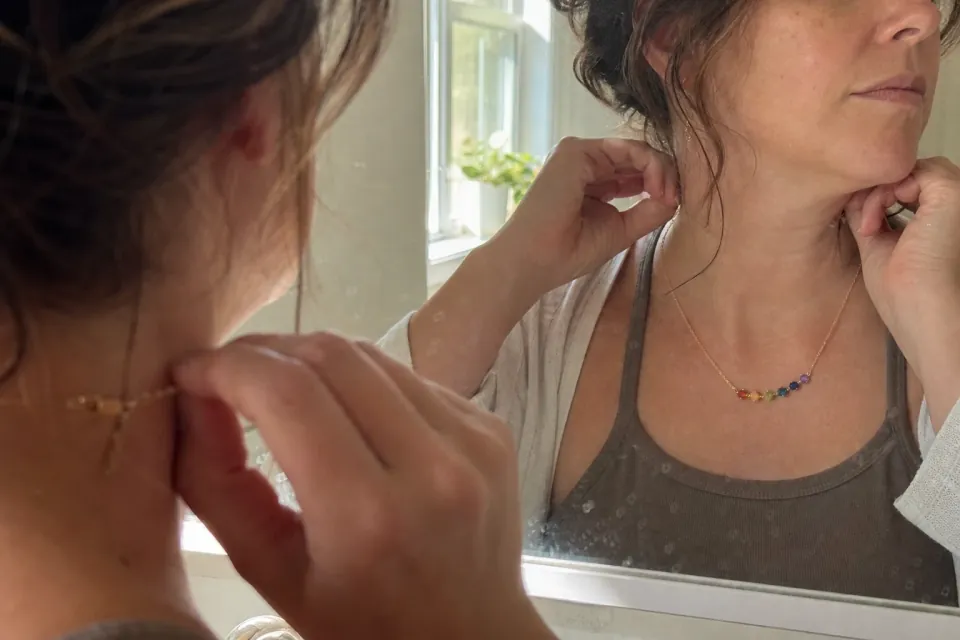
A chakra necklace takes a whole-field approach. Rather than placing fear at the center, it invites the root, heart, throat and other energy centers into relationship. Root energy steadies. The solar plexus clarifies self-direction. The heart keeps compassion from becoming self-abandonment. The throat supports an honest boundary.
The existing chakra necklace ritual shows how to work with one center at a time. If you want to compare expressive gemstone designs, the Daya Jewelry review includes the practical questions to check before buying.
One piece can be enough
A wrist full of protective stones can begin to feel like armor you are afraid to remove. More symbols do not automatically create a clearer field. Choose one primary piece for the day and give it one job.
A black tourmaline pendant may hold grounding during work. A hamsa can accompany a family gathering. An amethyst ring can stay beside prayer. Let other jewelry be adornment, memory or pleasure. Protection does not have to consume the whole body.
If shopping starts with panic, close the tabs. Return when you can compare chain, material and meaning without searching for a guarantee. Our guide to spiritual jewelry brands can help once the intention is steady.
A 60-second boundary ritual at the doorway
Stand with both feet on the floor before leaving home. Hold the piece in your palm or touch it where it rests.
Breathe in and notice the back of your body. Breathe out and feel the soles of your feet. Picture your energy gathering from the edges of the room and returning to the center of your chest.
Say, quietly or aloud: I meet this day from inside my own energy. I can care without carrying. I can listen without opening every door.
Fasten the necklace or turn the ring once. Then leave. The ritual is complete when your hand comes away from the piece.
For the woman who feels everything in the room
Some women identify as empaths because other people’s moods, tension and needs register quickly. You do not need to prove or diagnose that sensitivity to build a gentler boundary around it.
Choose a piece that returns attention rather than making vigilance sharper. A smooth smoky quartz bead may be easier than a pointed pendant. Labradorite can accompany the shift from noticing a feeling to asking whether it is yours. A bracelet works well if touch is calming; a necklace under clothing offers privacy when visible symbols invite questions.
Pair the jewelry with ordinary boundaries. Step outside. Delay the reply. Move seats. Let a call end. The talisman marks the choice, but you are still the one making it.
Clean the material and clear the energy
Physical care comes first. Wipe metal with a soft dry cloth after wear. Keep plated surfaces away from prolonged moisture, perfume and friction. Store chains unclasped and separate enough that protective charms do not chip neighboring stones. Check elastic, clasps and jump rings regularly, especially on the piece you reach for every day.
For mixed materials, sound and focused intention are the simplest energetic methods because nothing needs to be soaked or salted. Smoke may suit some practices, but keep ventilation, coatings and household sensitivities in mind. Moonlight through a closed window avoids dew and weather. The full cleansing and charging guide helps match a ritual to the stone and metal.
When you take the piece off at night, set it down deliberately rather than treating removal as a lapse in protection. Your energy is not abandoned on the bedside table. The jewelry has done its work for the day: it brought you back to your own boundary, one touch at a time.