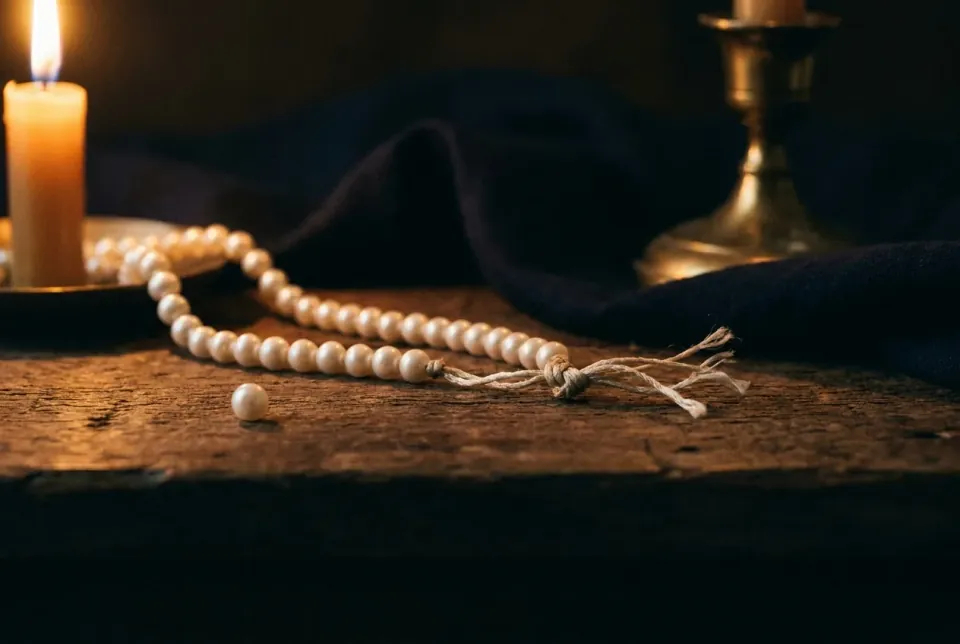
A broken chain can feel louder than the tiny sound it makes. One moment the pendant is at your chest; the next it is in your hand or somewhere on the floor. If the piece held protection, love or a promise, the mind may rush to turn the break into a verdict.
The spiritual meaning of jewelry breaking is not fixed. It can invite reflection on completion, protection, accumulated energy, a crossed boundary or a choice between repair and release. First, contain the pieces and inspect the physical failure. Ordinary wear does not make the moment spiritually empty, and a meaningful moment does not cancel the need to fix a loose setting.
Before interpreting anything, look at what failed
Place every piece in a shallow dish or zippered pouch. Check the floor, clothing and nearby furniture for beads, stone fragments and sharp wire. Keep children and animals away until the area is clear.
Then examine the object in good light:
- Did the clasp open, or did the small jump ring beside it pull apart?
- Has bracelet elastic frayed, stretched or dried out?
- Is a prong bent or a glued setting empty?
- Did plating wear through where links rub?
- Is the stone cracked, chipped or simply showing an inclusion that was already there?
Jewelry meets real friction. It catches on collars, moves against desks, gets pulled during dressing and may be worn through showers, sleep or exercise. Every clasp, knot and link accumulates the history of that ordinary wear.
If a gemstone is damaged, identify the material before cleaning or attempting a repair. The GIA Gem Encyclopedia provides gem-specific information and buyer guidance. Foil-backed stones, coated gems, pearls, opals and glued settings need different handling from an unmounted durable stone.
The physical answer and the spiritual answer can coexist. A worn jump ring may explain how the pendant fell. The timing may still ask for your attention.
Five readings to sit with, not laws to obey
1. A cycle has completed
A piece often enters life at a threshold: the end of a relationship, the beginning of motherhood, a move, a grief, a return to prayer. When it breaks after that season has changed, completion may be the cleanest reading.
Completion does not mean the original intention failed. The necklace may have accompanied the exact chapter it was asked to hold. You can repair it for a new chapter, retire it with thanks or keep one element and let the old form end.
2. Its protective work feels fulfilled
Protective jewelry has a long historical record. The V&A’s jewelry history includes objects worn against danger and pieces with inscriptions believed to protect their wearers. Within a current spiritual practice, the break of an evil eye amulet, hamsa or dedicated stone may feel like protection completed.
Treat that feeling as an invitation, not proof that disaster narrowly missed you. Ask what boundary or act of discernment the piece helped you practice. The protection may have become part of your own behavior.
3. The piece has carried accumulated charge
Jewelry worn through conflict, travel, ceremonies or emotionally dense work can begin to feel saturated. A break may coincide with the sense that the piece has held enough.
Before deciding it must be discarded, clear the intact parts with a material-safe method. Sound, prayer and focused intention do not require soaking. The cleansing and charging guide offers options for mixed stones and metals. Afterward, notice whether you want the piece close again. Relief at the thought of repair is information. Relief at the thought of letting it rest is also information.
4. A boundary was crossed
Sometimes jewelry breaks during the very moment it symbolizes: a bracelet snaps in an argument, a pendant falls while entering a place you resisted, a ring bends when an old pattern returns. The event can bring a boundary into focus.
Do not turn this reading against yourself. A crossed boundary is not evidence of low vibration or spiritual failure. It may simply reveal the sentence you need now: I am no longer available for this, I need more time, or this relationship needs a different form.
5. You are being asked to choose repair or release
Breakage interrupts habit. The piece can no longer be put on without a decision. That pause may be the message.
Repair can be an act of devotion. Release can be honest. Remaking a necklace into a shorter chain or resetting a stone can let the meaning mature. None is spiritually superior. Choose the form that respects both the object and the life attached to it.
Read the context around the break
The most useful clues are close to the event. Write down what happened immediately before the jewelry broke. Where were you? Who was present? What were you about to say or do? What did the piece originally represent?
Then include the body’s first response, before the interpretation formed. Did you feel grief, fear, relief, tenderness or nothing beyond annoyance? A calm response may suggest ordinary repair. Sudden relief can point toward completion. Grief may show that the piece still carries a bond you want to preserve.
Avoid searching until you have recorded your own context. A generic omen page does not know that the necklace belonged to your grandmother, that the elastic was visibly worn or that you had just decided to leave a job. Meaning lives in those particulars.
Different pieces raise different questions
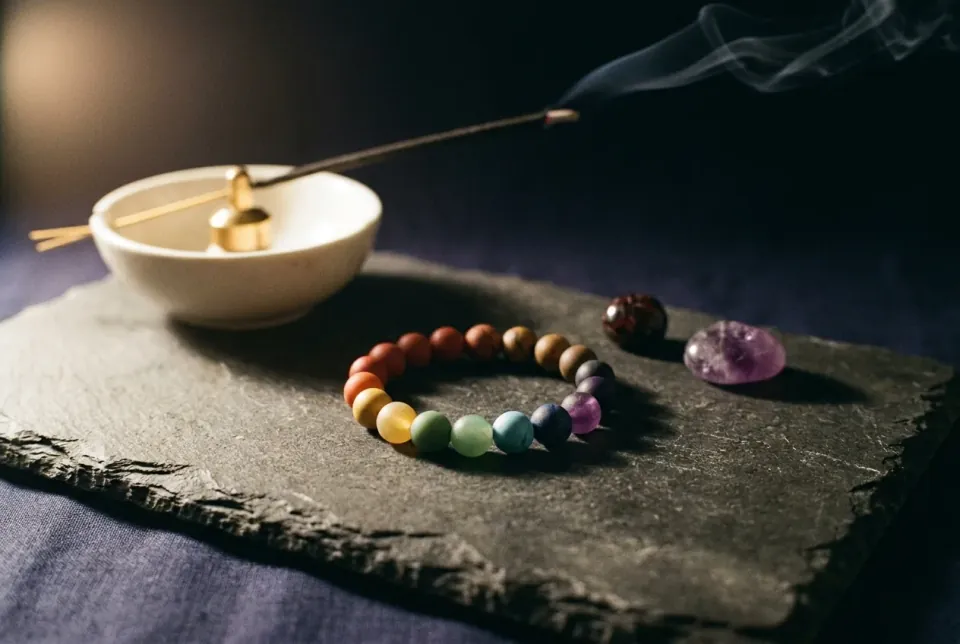
When a chakra bracelet breaks
Elastic bracelets fail under repeated stretch, skin oils and snagging. Gather the stones and inspect the cord first. Then look at the colors that scattered or the bead you noticed immediately. The moment may feel like release, energetic saturation or a shift in which center needs attention.
The chakra bracelet meaning guide explains the seven-center map and the practical choice between restringing and changing the arrangement. A jeweler or experienced bead worker can often replace elastic and check each bead for sharp holes that may cut the new cord.
When an evil eye necklace breaks
A common spiritual reading says the amulet completed protective work or absorbed a charge. Hold that reading lightly. Check the chain, bail and eye charm, then ask what protection meant in the days before the break.
If the symbol remains intact, you may place it on a new chain. If the charm itself cracked, you may retire it, keep it on an altar or replace it after a closing ritual. The evil eye necklace guide gives the cultural context behind the amulet and its relationship to protective intention.
When moonstone cracks
A crack in moonstone needs physical attention because an existing fracture can widen under pressure. Stop wearing the piece until the setting and stone are assessed. Do not soak it or test the crack by pressing on it.
Spiritually, moonstone is often tied to cycles, intuition and beginnings. A crack can mark a threshold that arrived differently than expected. It can also be impact damage. Our moonstone necklace guide keeps the gemology and energetic reading in their proper places.
When gifted or heirloom jewelry breaks
A gifted piece carries at least two relationships: the one with the object and the one with the giver. An heirloom may hold several generations. Breakage can stir fear that the bond itself has broken.
The relationship is not stored only in a clasp. Repairing the piece can continue its lineage. Remaking it can make the inheritance wearable. Keeping it safely in its broken state may be right when alterations would erase an important feature or inscription.
Before changing an antique or valuable piece, ask a qualified jeweler whether a repair would affect its structure or value. Photograph every part and any maker’s marks first.
A quiet listening ritual for the broken pieces
Set the contained pieces on a clean cloth inside a tray. Do not hold sharp fragments. Sit close enough to see the object clearly, with both feet supported.
Take one slow breath and name the physical fact: The chain broke. The stone cracked. The elastic gave way. This keeps the ritual grounded.
Place a hand on your chest and ask three separate questions, leaving silence after each one:
What did this piece hold for me?
What changed around the moment it broke?
Does care now look like repair, transformation or rest?
Write the first plain answer. Avoid forcing a dramatic message. If no answer comes, close the cloth around the pieces and wait a few days. Urgency is not required.
Repair, remake, retire or return
A professional jeweler is the right next step for broken solder joints, precious metals, damaged prongs, chipped valuable stones, pearls, pavé, heirlooms and any piece whose material you cannot identify. Bring every fragment. Ask what failed, whether other links or settings are also worn and what the repair will change.
Simple costume or beaded jewelry may be suitable for careful restringing if you know the materials and technique. A broken necklace can become a bracelet; an intact charm can move to a stronger chain. Keep unused fragments labeled so their story is not lost.
Retired jewelry can rest in a box, memory drawer or on an altar. If you want to return a natural, untreated stone to the earth, first confirm that it contains no metal, elastic, resin, glue, dye, glass, coating or attached finding. Follow local land and disposal rules. Never bury an assembled piece. Often the most respectful return is not burial at all, but responsible reuse, recycling or safe storage.
Losing jewelry is a different kind of absence
When a piece breaks, the object remains and asks what form comes next. When it is lost, there may be no object to repair or examine. The spiritual reading may center on impermanence, loosened attachment or a chapter leaving without ceremony. The practical reading may be an open clasp, an unfamiliar routine or a piece removed and forgotten.
Retrace the physical path before creating meaning. Contact the place you visited, check bag linings and clothing, and look where necklaces or rings are usually removed. If the piece does not return, you can still close the relationship. Write what it held, light a candle and decide which part of its intention stays with you.
A repaired clasp leaves a visible join. A remade bracelet may place the beads in a new order. These marks do not weaken spiritual meaning. They show that care answered the break, and the object was allowed to continue without pretending nothing happened.